
Disclaimer: It is an articulation of what i have understood and sharing it as a blog. Any suggestions / comments welcome.Everything in this world vibrates. Whatever vibrates produces a sound. Every vibration has sound, meaning, form, colour and light. While all of us may agree on the sound being part of vibration some of us would not agree that it always has a meaning, colour and light.Sounds are of 2 types:1. That which is part of an human language. Here word is constructed from letters and each word has its meaning and the language being compiled using the grammar.2. Sounds that are not part of human language and hence does not make sense to us. Hence we may perceive that it does not have any meaning. Here too there are sounds which have meaning like Beeja Aksharas or animal sounds which certainly has meaning. But lets ignore the second type in this blog and focus on the first.In the first type the aggregation of vibration as sound can be represented with a Akshara (Alphabet / letter) which also has a meaning. If you need more details you can refer to this site which http://www.sanskrit-sanscrito.com.ar/en/learning-sanskrit-first-steps-1-1/406 offers more details on Sanskrit alphabets.So, this alphabet is called Akshara - which is formed by the merging of sound, meaning, form, color and light. This is the origin or Moolam in Tamil. This akshara cannot be broken down further which means sound and its attribute (meaning), light and its attributes (form, color) all coexist and cannot exist independently. In tamil and Sanskrit this combination of light and sound is called Bindu and Nadham.Let’s look at the attributes of light which is the form of the letter. There are 4 fundamental shapes that gives rise to form. Dot, Line, Curve (Cresent) and circle also known as Bindu, kodu, pirai, vattam in Tamil. All forms in this universe are based on the combination of the above 4 fundamental shapes.Everything starts with bindu (dot), at a very small time-distance dimension everything is a straight line (Kodu), at a medium spacio-temporal dimension everything is a pirai or curve / cresent, because everything is rotating. At a very large time-distance dimensio everything is a circle in 2 dimension and a helical spiral leading to a sphere in 3D. Alternatively what can be said is a bindu (dot) over Spacio temporal journey becomes a line, cresent, a circle / sphere and ends as a dot. "What starts with a bindu ends in a bindu after this journey".Now, lets look at the fundamentally attributes of an akshara. Each letter apart from having meaning, sound, light, form, color as 5 attributes has further attributes as:1. State of its existence: As either matter, energy (life- vowels), Consonants - Energy+Matter, a living word. Only when they combine a letter itself is formed. Body + life is a living organism and hence an Akshara.2. Gender: Each Akshara can also be classified as a male, or female or neuter gender. These articles below can explain this paragraph better.So an akshara has the following 7 attributes - sound, meaning, form, color, light, gender, state of existence. When Aksharas combine with each other and with time a word is produced. Each Akshara has a small time duration called Matra. When Aksharas combine then so many matras get added and a word is formed.Or alternatively time (Kaalam) creates word from a combination of aksharas. When the combination of sound, light, meaning, form and color is aligned with the vibration then it is called as word. When everything is aligned in the above fashion the word has a natural rhythm. This is called Seelam in Tamil.Combination of words form a language. A language so created from the moolam (primordial vibration) by the kaalam (time) with seelam (natural rhythm aligned with primordial vibration) that retains a natural meaning for that vibration is a classical language. This means 7 attributes of each alphabet is aligned well that the word's attributes are in line with the sum of the attributes of the letter. The quick measure for this are:1. Can you break a word to its roots, ie. individual letters?2. Does each letter carry a meaning?3. More importantly when these letters are combined is the individual meanings of the letter retained in the word?4. Does each letter sound uniquely?5. Does that letter retain that sound in a word? Alternatively when you add the sounds of the letter can you pronounce the word?These words also take a gender in a classical language. So a word has 2 more attributes than the alphabet. They are time (kaalam) and ability to combine / fusion (sandhi) as per the grammar. Here grammar is an expression of seelam (natural rhythm).When you speak in classical languages like Sanskrit and Tamil, there is no difference between how the word is pronounced and how the letters in that combination is pronounced. There are no silent words and the pronunciation will not change with different words.For Ex. In Psychology (P) is silent. This can be written as Sykhology, cykhology and everything can be right.So an Akshara has 7 attributes as mentioned above and words have 2 more attributes and these attributes fundamentally define a language. I am stopping this article now and based on queries raised for this blog, i shall write the next article on this topic.Happy reading!
Chicklet - Add to Google Homepage
Sunday, March 2, 2014
"Akshara - Word - Language" - Its nature, science and few basics


Tuesday, January 14, 2014
Happy Makara Shankaranthi / Pongal / Lohri.. 2014
Prostrations to mother & father
Prostrations to Guru
Prostrations to Sun god
Prostrations to the rain god
Prostrations to mother Earth
Prostrations to Mother Tamizh
Gratitude to ancestor’s blessings
Gratitude to friend farmers
Gratitude to their noble work
Gratitude to Cow and Ox
Pot rice that’s boiled and cooked
Sweet rice to you and me
Sugarcane to kids & friends
Saffron rice to crows and cows
A handful of rice balls to unfed & poor
A handful of rice flour to ants and worms
A handful of silver to our sisters & brothers
A heart full of wishes to our family & friends
Sow right thoughts, reap right words
Sow right words, reap right deeds
Sow right deeds, reap right habits
Sow right seeds, reap right fruits
There is a time to till, a time to sow
There is a time to water, time to mow
This is the time to reap, fight the low
Let’s reap yet sow and fight the low!
Health to you, wealth to you
Might to you, right to you
Peace to you, prosperity to you
May the best of times chase you!
Happy Pongal!
Prostrations to Guru
Prostrations to Sun god
Prostrations to the rain god
Prostrations to mother Earth
Prostrations to Mother Tamizh
Gratitude to ancestor’s blessings
Gratitude to friend farmers
Gratitude to their noble work
Gratitude to Cow and Ox
Pot rice that’s boiled and cooked
Sweet rice to you and me
Sugarcane to kids & friends
Saffron rice to crows and cows
A handful of rice balls to unfed & poor
A handful of rice flour to ants and worms
A handful of silver to our sisters & brothers
A heart full of wishes to our family & friends
Sow right thoughts, reap right words
Sow right words, reap right deeds
Sow right deeds, reap right habits
Sow right seeds, reap right fruits
There is a time to till, a time to sow
There is a time to water, time to mow
This is the time to reap, fight the low
Let’s reap yet sow and fight the low!
Health to you, wealth to you
Might to you, right to you
Peace to you, prosperity to you
May the best of times chase you!
Happy Pongal!
Wednesday, October 16, 2013
Lessons in Karma: Garuda and tiny bird
I read this article from the site below and liked it very much. It did give me answers to few questions which has been nagging me for some time.
http://www.hinduhumanrights.info/lessons-in-karma-lord-garuda-and-the-tiny-bird/
Just reproducing the article in full without any adulteration with my thoughts. I felt that the article is written so nicely please give all the credit to the site and its author.

High in the reaches of Mount Kailash is the abode of Lord Shiva. One evening Lord Vishnu, came to see Shiva. He left behind at the entrance Garuda, the half-man, half-eagle composite, who served as his vehicle.
Garuda sat alone, marveling at the natural splendor of the place. Suddenly his eyes fell on a beautiful creature, a little bird seated on the arch crowning the entrance to Shiva’s place. Garuda wondered aloud: “How marvelous is this creation! One who has created these lofty mountains has also made this tiny bird – and both seem equally wonderful.”
Just then Yama, the god of death who rides a buffalo, came passing by with the intention of meeting Shiva.
As he crossed the arch, his eyes went over to the bird and he raised his brows in a quizzical expression. Then he took his eyes off the bird and disappeared inside.
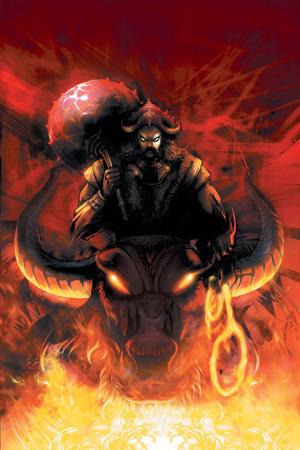
Now, in the ancient Hindu thought, even a slight glance of Yama is said to be the harbinger of death. Garuda, who had observed Yama’s action, told himself, “Yama looking intently at the bird can mean only one thing – the bird’s time is up. Perhaps on his way back he will carry away the bird’s soul with him.” Garuda’s heart was filled with pity for the helpless creature.
That it was oblivious of its own impending doom further agonized Garuda and he resolved to save the bird from the clutches of death. He swooped it up in his mighty talons, rushed to a forest thousands of miles away and left the bird on a rock beside a brook. Then he returned to Kailash and regained his position at the entrance gate.
Soon after, Yama emerged from inside, and nodded to Garuda in recognition. Garuda greeted the god of death and said: “May I put a question to you? While going in, you saw a bird and for a moment you became pensive, why?”
Yama answered him thus: “Well, when my eyes fell on the little bird, I saw that it was to die in a few minutes, swallowed by a python, far away from here in a forest near a brook. I wondered how this tiny creature would traverse the thousand of miles separating it from its destiny in such a short time. But there are no such serpents here, high on Kailash, and I was briefly puzzled.” Then I forgot. Surely it must have happened somehow.”
Saying this, Yama smiled and went away. Did he know about Garuda’ s specific role in the matter? Nobody can know for sure. Again, Garuda marveled at the turn of events had taken unfolding karma.
Karma, and its Consequences:
The word karma is derived from the Sanskrit root ‘kri,’ meaning ‘to do,’ implying that all action is karma. Technically, the term incorporates both an action and its consequence.
Thus Garuda’s karma consisted of the act of carrying away the bird and also its consequent snatching by the cruel hands of destiny. Hence, a deed, pure in its content, led to an apparently unfavorable outcome. Through this subtle tale, we are made to confront a dilemma which constantly recurs in our own lives, namely, the relative impurity and purity of an action. Is an action to be deemed positive or negative solely on the basis of the result it generates? Or, is there some other criterion? Indeed there is. What determines the nature of the karma is the will or intention behind an act.
“One who acts with the best of intentions, does not get the sin of the outward consequence of his action.” (Yoga Sikha).
For example, a doctor is not responsible for murder, if the operation per chance ends in the death of his patient. In the above tale, Garuda’s duty was not to protect the bird, but rather to try and protect it.
“Even if a man does not succeed, he gets all the merit of doing his duty, if he strives the utmost to his capacity.” (Mahabharata: Udyoga Parva 93.6)
“Some undertakings succeed and others fail. That is due to the divine order of things. If a man does his part of the work, no sin touches him.” (Mahabharata: Santi Parva 24.30)
It is the psychological impulse behind an action that is ‘karma,’ that which sets going a chain of causes culminating in karmic fruits. Actions then must be intentional if they are to generate karmic fruits.
One of the most significant instructional references to karma comes from the Bhagavad Gita, which says:
“You have the right only to work, but not to the fruits thereof.” (2.47)
Significant here is the fact that we are entitled only to act, and have ‘no right’ over the ensuing results. This profound assertion is not mere discourse, but rather loaded with sound practical advice, which can act as a sensible strategy for whatever we set out to achieve. This is because the outcome of any enterprise is not solely dependent on our individual efforts but is bound to numerous other factors over which we may or may not have influence.
Thus why worry over something on which we do not have control? Also, detaching ourselves from the burden of anxiety over the impending result frees us from mental stress, and enables us to devote ourselves with calm concentration to the matter at hand.
Subscribe to:
Posts (Atom)